
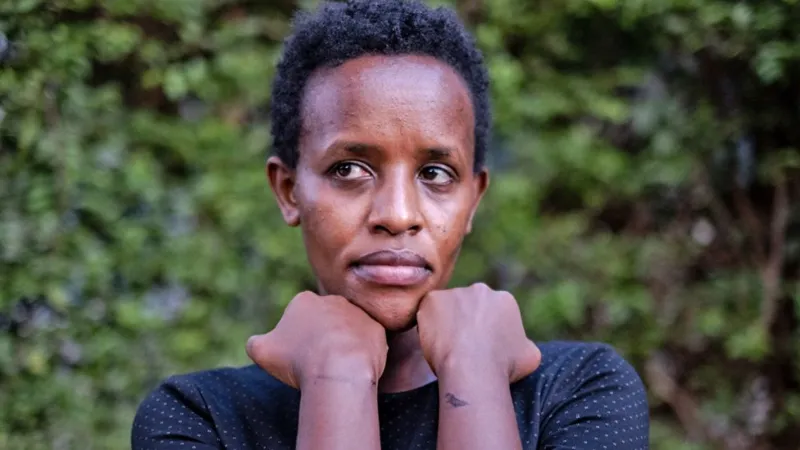
A Ugandan human rights activist has accused Tanzanian authorities of severe abuse during her detention, including rape and physical torture — claims that have ignited calls for a regional investigation and heightened diplomatic tensions between East African nations.
Agather Atuhaire, a prominent advocate for civil liberties, says she endured brutal treatment after being arrested in Tanzania alongside Kenyan activist Boniface Mwangi. The pair had travelled to Arusha in solidarity with Tanzanian opposition leader Tundu Lissu, who was appearing in court to face treason charges — a move Tanzania’s President Samia Suluhu Hassan had earlier denounced as “foreign meddling.”
Atuhaire, who went missing for days, was found abandoned at the Uganda-Tanzania border. In an emotional and disturbing account shared with the BBC, she alleges she was blindfolded, stripped, and raped by men in plain clothes who claimed to be acting on behalf of Tanzanian state security. She described being repeatedly beaten, forcibly silenced as she screamed in pain, and later dumped near the border with visible injuries, including deep handcuff scars. Her statement corroborates earlier warnings issued by her rights organization, Agora Centre for Research, which had flagged signs of torture.
Boniface Mwangi, who was detained with Atuhaire, said he was subjected to inhumane treatment including threats of genital mutilation and psychological torment. He recalled the sound of Atuhaire’s screams while they were held in adjacent locations, describing how they were forbidden from communicating under threat of violence. “Any attempt to speak to each other was met with kicks, slaps, and insults,” Mwangi wrote in a public post. “They told us we were receiving ‘Tanzanian treatment’ as ordered by a senior state official.”
Neither activist was permitted to attend Lissu’s trial, despite having valid entry into Tanzania. On Monday, President Suluhu had issued a public warning that her government would not tolerate foreign activists stirring what she called “chaos” in her country. That same day, both Mwangi and Atuhaire were taken into custody under undisclosed circumstances. Their families lost contact with them, triggering alarm in Kenya and Uganda. Street protests broke out in Nairobi, and civil society groups demanded immediate intervention.
The Kenyan government lodged a formal protest, accusing Tanzanian officials of denying consular access to Mwangi despite repeated requests. The Foreign Affairs Ministry said it had been unable to verify his condition for days, prompting fears of forced disappearance. Uganda’s High Commissioner to Tanzania later confirmed that Atuhaire had returned home and was reunited with her family, but offered no details on her ordeal.
The Tanzanian government has remained silent. It has neither acknowledged the detentions nor responded to the grave allegations. Human rights observers across East Africa have condemned the silence and called for a transparent inquiry. Legal experts warn the treatment described by the activists may constitute breaches of international human rights conventions to which Tanzania is a signatory.
The trial of Tundu Lissu, the opposition figure at the heart of the visit, continues to polarize Tanzanian politics. A fierce critic of President Suluhu, Lissu has accused the government of using the courts to block him from running in the 2025 presidential elections. His arrest on treason charges has sparked renewed concern over political freedoms and rule of law in the country.
Post a Comment